Welcome to Bio Basic Asia Pacific Pte Ltd
This website uses cookies to ensure the best experience. By continuing, you agree to our Privacy Policy.


PCR Tubes vs. Microcentrifuge Tubes: Why Interchanging Them Ruins Results
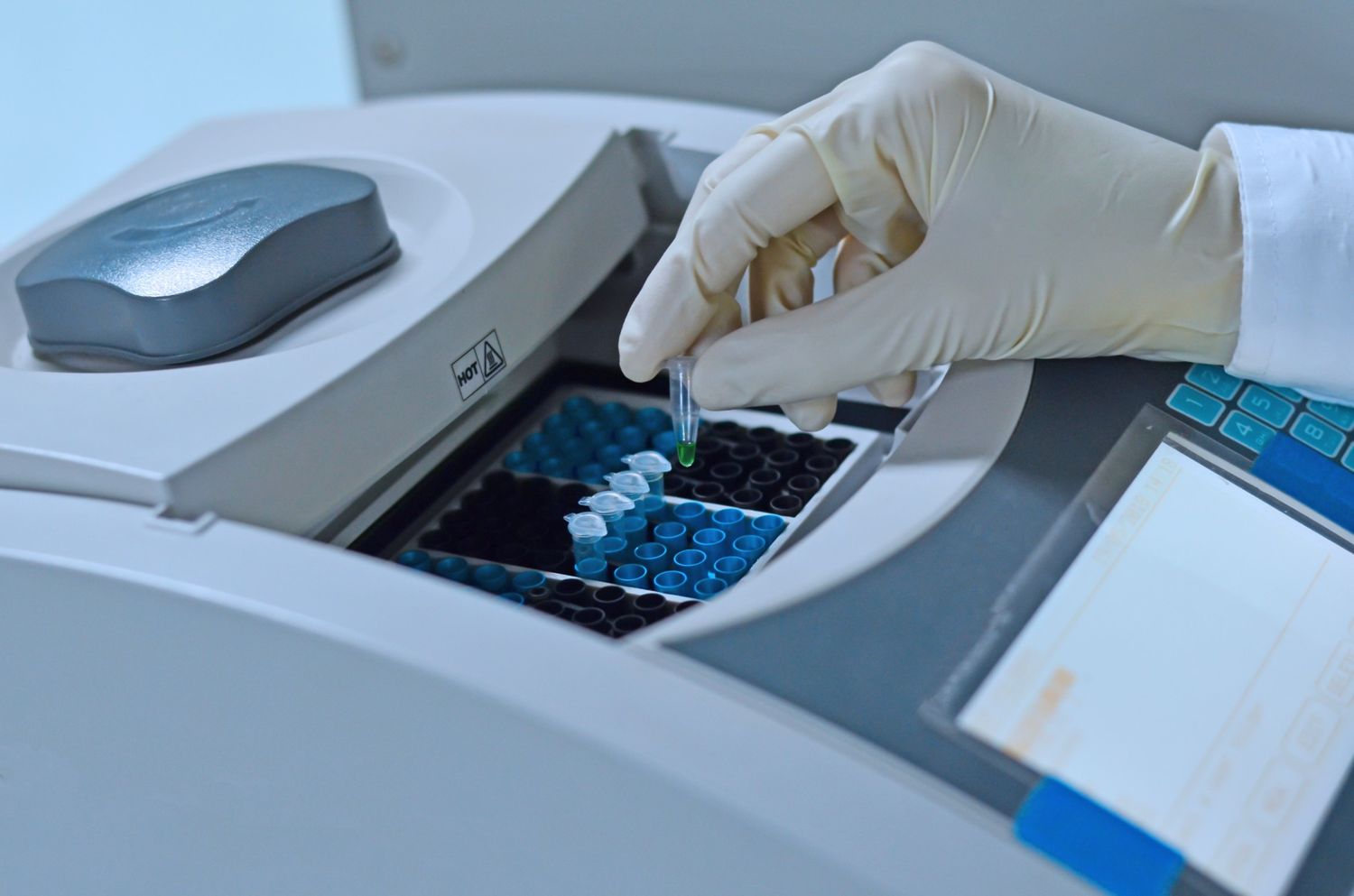
In many laboratories, PCR tubes and microcentrifuge tubes sit side by side on the bench. Because they often look similar, it is easy to assume they can be used interchangeably. However, using the wrong tube for PCR can seriously affect amplification efficiency and data accuracy.
The reason lies in heat transfer. Polymerase chain reaction relies on rapid temperature cycling, and the tube plays a direct role in how efficiently the reaction mixture heats and cools. When a standard microcentrifuge tube is used in place of a PCR tube, the thick plastic walls slow down heat transfer, which can disrupt the reaction.
Understanding these differences helps prevent failed reactions and ensures consistent results in both conventional PCR and quantitative PCR workflows.
Why PCR Tubes Are Designed Differently
PCR tubes are specifically engineered for thermal cycling. Their walls are extremely thin so that heat can move quickly between the thermocycler block and the reaction mixture.
During a PCR run, the sample repeatedly cycles through three temperature stages:
- Denaturation at about 95°C
- Annealing at around 50–65°C
- Extension at about 72°C
Each cycle must occur rapidly and precisely. Thin-walled PCR tubes allow the reaction mixture to reach these temperatures quickly and uniformly.
Microcentrifuge tubes, by contrast, are designed for centrifugation and storage rather than thermal cycling.
Why Microcentrifuge Tubes Cause PCR Problems
Microcentrifuge tubes typically have thicker plastic walls to withstand high centrifugal forces. While this makes them durable for centrifugation, it creates a major disadvantage for PCR.
When used in a thermal cycler, these tubes:
- Heat more slowly
- Cool more slowly
- Produce uneven temperature distribution in the reaction mix
As a result, DNA polymerase may not operate under the correct conditions, leading to:
- Reduced amplification efficiency
- Non-specific amplification
- Lower yield of PCR products
- Inconsistent results between runs
In quantitative PCR experiments, this issue becomes even more critical because temperature inconsistencies can distort fluorescence measurements.
PCR Tube Design and Heat Transfer Efficiency
PCR tubes are manufactured using thin polypropylene walls, which provide excellent thermal conductivity while remaining chemically inert.
This design ensures:
- Rapid temperature equilibration
- Accurate thermal cycling
- Consistent amplification conditions
The difference may appear small, but even slight delays in reaching the correct temperature can affect enzyme activity and primer binding.
For experiments that require precise temperature control, such as qPCR or high-throughput PCR, using the correct PCR tubes is essential.
Understanding Low Profile vs High Profile PCR Tubes
PCR tubes are also available in low-profile and high-profile designs, which relate to the height of the tube and its compatibility with different thermocycler blocks.
High Profile PCR Tubes
High-profile tubes are taller and contain a slightly larger air gap above the reaction mixture.
They are commonly used in older thermocyclers or instruments designed with deeper heating blocks.
Typical characteristics include:
- Standard height design
- Compatible with many traditional PCR machines
- Suitable for reaction volumes around 50 µL
Low Profile PCR Tubes
Low-profile tubes have a shorter height and a reduced air space above the sample.
Because the reaction volume sits closer to the heating block, heat transfer becomes even more efficient.
Typical characteristics include:
- Shorter tube design
- Improved thermal response
- Often used for fast PCR protocols
- Commonly used with modern qPCR instruments
Many modern thermocyclers recommend low-profile tubes to improve reaction speed and temperature accuracy.
Compatibility with Different PCR and qPCR Machines
Different PCR systems are designed to work optimally with specific tube formats. Choosing the correct PCR tube helps maintain proper contact between the tube and the heating block.
Bio-Rad PCR Systems
Many Bio-Rad thermal cyclers support both PCR tubes and PCR strips. Low-profile tubes are commonly recommended for fast cycling protocols used in instruments such as the CFX series.
These designs improve temperature uniformity across the block.
Roche PCR Platforms
Roche qPCR instruments often rely on specialised plate formats or thin-walled PCR tubes that support rapid temperature transitions required for quantitative fluorescence detection.
Maintaining consistent thermal contact is critical for accurate qPCR measurements.
ABI (Applied Biosystems) Instruments
ABI systems, widely used in many research laboratories, typically use PCR plates or optical PCR tubes for fluorescence-based detection.
These tubes often require clear optical caps or lids that allow the instrument to detect fluorescence signals during amplification.
Using non-compatible tubes may affect both temperature performance and optical readings.
Thermo Fisher PCR Instruments
Thermo Fisher thermocyclers also rely on thin-walled PCR tubes or plates designed for efficient heat transfer.
Many of their fast PCR systems perform best when paired with low profile PCR tubes, which reduce the distance between the reaction mixture and the heating block.
When Microcentrifuge Tubes Should Be Used Instead
Microcentrifuge tubes remain essential for many molecular biology workflows, but they serve different purposes.
Typical uses include:
- Sample storage
- DNA or RNA purification
- Enzyme reactions before PCR
- Centrifugation of reaction mixtures
Once the PCR mixture is prepared, it should be transferred to the correct PCR tube or PCR plate before thermal cycling.
This ensures that the reaction experiences the correct temperature profile throughout the PCR process.
Need Reliable PCR Tubes for Your Experiments?
At Bio Basic Asia Pacific, we support research laboratories across Singapore with dependable molecular biology consumables, including high-quality PCR tubes and laboratory plastics designed for reliable thermal cycling performance.
Our products are compatible with commonly used PCR and qPCR platforms from manufacturers such as Bio-Rad, Roche, ABI, and Thermo Fisher. If you need assistance selecting the right PCR consumables for your workflow, our team is ready to help you find the best option for your experiments.
Conclusion
Although PCR tubes and microcentrifuge tubes may look similar, they are designed for very different laboratory tasks. PCR tubes use thin walls that allow rapid heat transfer during thermal cycling, while microcentrifuge tubes are built with thicker plastic to withstand centrifugation forces.
Using microcentrifuge tubes in PCR instruments can slow heat transfer, disrupt amplification conditions, and lead to unreliable results. Selecting the correct PCR tube format, including choosing between low-profile and high-profile designs, helps ensure accurate and reproducible DNA amplification.
