Welcome to Bio Basic Asia Pacific Pte Ltd
This website uses cookies to ensure the best experience. By continuing, you agree to our Privacy Policy.


0.22 µm vs. 0.45 µm: Which Syringe Filter is Right for Your Assay?
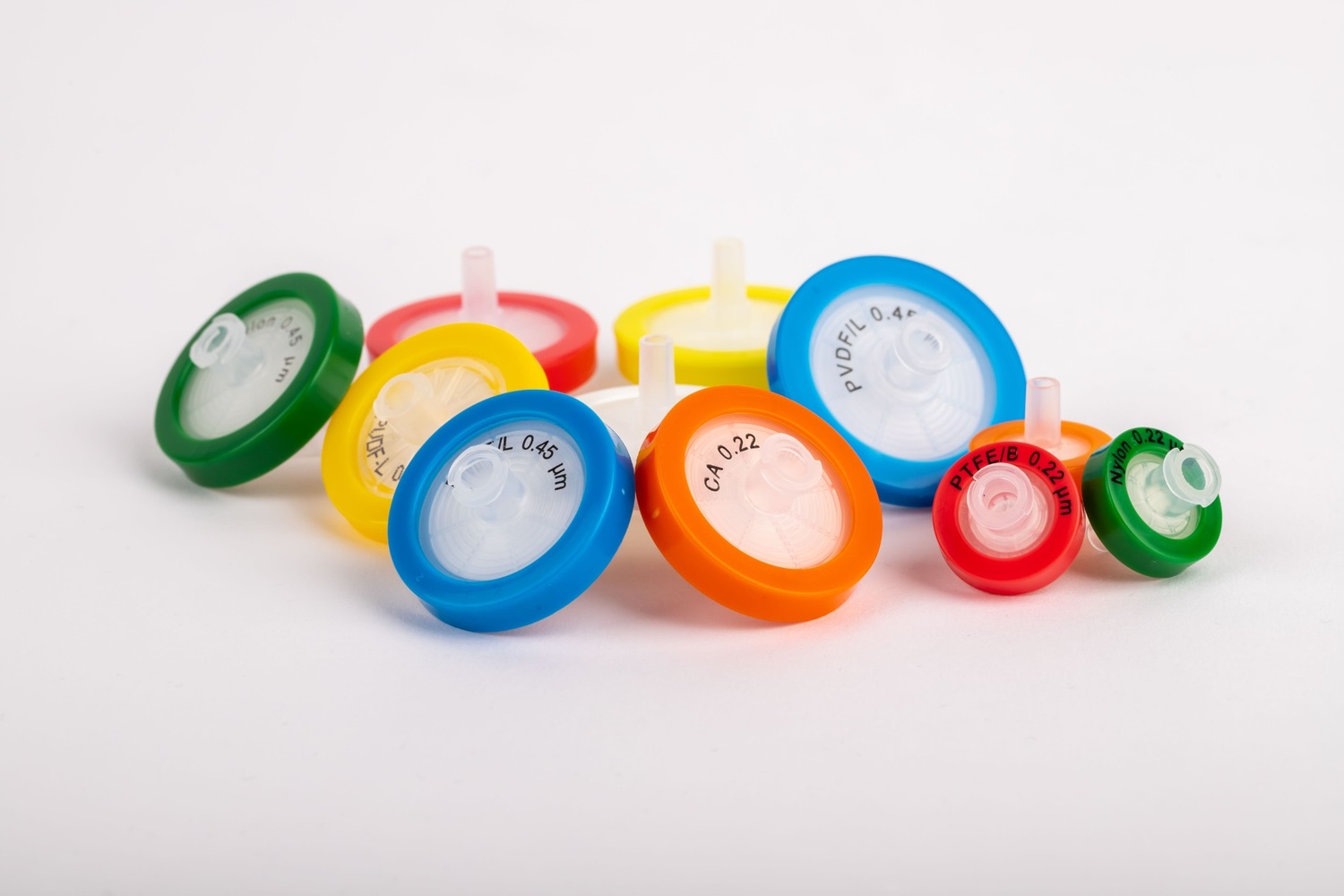
Syringe filtration is a routine step in many laboratory workflows. Whether preparing samples for chromatography, removing particles from buffers, or sterilising solutions, the correct syringe filter helps protect both your experiment and your equipment.
However, researchers often face a common question: should they use a 0.22 µm filter or a 0.45 µm filter?
Although the difference appears small, these pore sizes serve very different purposes. Choosing the wrong one can affect sample purity, flow rate, and even damage sensitive instruments such as HPLC systems.
What Does the Pore Size Mean?
Specifically, the pore size of a syringe filter determines the size of particles that will be removed during filtration. Consequently, you must choose the correct size to ensure the success of your experiment.
For instance, the most common choices include:
- 0.45 µm filters remove larger particles and suspended debris
- 0.22 µm filters remove smaller particles and most bacteria
Both filters are widely used in laboratory applications, but their roles differ depending on the purpose of the filtration step.
0.45 µm Syringe Filters: For Sample Clarification
A 0.45 µm syringe filter is typically used to remove particulate matter from liquid samples. This process is often called clarification.
Ultimately, clarification is important because suspended particles can interfere with analytical instruments or clog chromatography systems.
Common applications
0.45 µm syringe filters are commonly used for:
- HPLC sample preparation
- Removing precipitates from reaction mixtures
- Buffer preparation for analytical instruments
- Environmental sample filtration
- Removing debris from cell culture supernatants
In chromatography workflows, a 0.45 µm filter protects HPLC columns from clogging by removing particles before injection.
Because the pores are larger, these filters also provide faster flow rates, which can be useful when filtering viscous solutions.
0.22 µm Syringe Filters: For Sterile Filtration
A 0.22 µm syringe filter is used when the goal is sterilisation rather than simple clarification.
Specifically, at this pore size, most bacteria are retained by the membrane, making these filters suitable for preparing sterile solutions.
Common applications
0.22 µm syringe filters are often used for:
- Sterilising cell culture media
- Preparing sterile buffers
- Filtering biological reagents
- Removing bacteria from solutions before storage
- Sample preparation for microbiological experiments
Because the pores are smaller, filtration may be slower than with 0.45 µm filters, particularly when handling viscous solutions.
Common Syringe Filter Membrane Materials
In addition to pore size, syringe filters are manufactured using different membrane materials. Each material has specific chemical compatibility and performance characteristics.
Consequently, choosing the right membrane ensures reliable filtration and prevents sample loss.
PES (Polyethersulfone)
PES membranes are widely used for biological samples because they offer high flow rates and low protein binding.
Typical uses include:
- Cell culture media filtration
- Protein solutions
- Biological buffers
- Sterile filtration applications
PES membranes perform well across a broad pH range and are commonly used for 0.22 µm sterilisation filters.
PVDF (Polyvinylidene Fluoride)
PVDF membranes are known for their chemical resistance and low protein binding.
Typical uses include:
- Protein and enzyme filtration
- HPLC sample preparation
- Organic solvent filtration
- Analytical chemistry workflows
PVDF membranes are compatible with both aqueous and many organic solutions, making them versatile for mixed solvent systems.
Nylon Membranes
Nylon filters are durable and compatible with many solvents, which makes them useful in analytical laboratories.
Typical uses include:
- HPLC sample preparation
- Organic solvent filtration
- Environmental sample filtration
However, nylon membranes may exhibit moderate protein binding, so they are less suitable for protein-sensitive applications.
Cellulose Acetate
Cellulose acetate membranes are commonly used for biological samples due to their low protein binding.
Typical uses include:
- Protein filtration
- Enzyme solutions
- Sterile filtration of aqueous solutions
These membranes are best suited for aqueous samples rather than strong organic solvents.
PTFE (Polytetrafluoroethylene)
PTFE membranes are highly resistant to chemicals and organic solvents.
Typical uses include:
- Aggressive solvent filtration
- Gas filtration
- Organic solvent sample preparation
Hydrophobic PTFE membranes are particularly useful when filtering non-aqueous solvents.
Can Syringe Filters Be Used with Vacuum or Aspiration?
Syringe filters are primarily designed for manual syringe-driven filtration. A syringe applies pressure to push the liquid through the membrane.
In some cases, syringe filters can be connected to vacuum manifolds or aspiration systems using appropriate adaptors. However, they are generally not intended for large-volume vacuum filtration.
For vacuum filtration of larger samples, laboratories typically use:
- Vacuum filtration units
- Bottle-top filters
- Membrane filtration assemblies
Syringe filters are best suited for small-volume filtration, typically ranging from a few microlitres to tens of millilitres.
Why Filtration Matters Before HPLC Analysis
Specifically, high-performance liquid chromatography (HPLC) systems are highly sensitive instruments. Even small particles can damage the system or block the column.
Filtering samples before injection helps:
- Protect HPLC columns
- Prevent pump blockage
- Maintain stable pressure during analysis
- Improve chromatographic performance
For this reason, 0.45 µm syringe filters are commonly used for HPLC sample clarification. In some sensitive analytical applications, researchers may also use 0.22 µm filters to ensure maximum particle removal.
Other Applications That Require Syringe Filtration
Beyond chromatography, syringe filters play an important role in many laboratory workflows.
Examples include:
- Sterile filtration of culture media
- Removing precipitates from chemical reactions
- Preparing buffers for molecular biology experiments
- Environmental water testing
- Pharmaceutical formulation preparation
In these applications, filtration helps maintain sample purity and ensures that downstream analyses are not affected by contaminants.
Conclusion
Although 0.22 µm and 0.45 µm syringe filters may appear similar, they serve different purposes in laboratory workflows.
A 0.45 µm filter is typically used for sample clarification and protecting instruments such as HPLC columns from particulate contamination. A 0.22 µm filter, on the other hand, is used for sterilisation by removing bacteria from solutions.
In addition to pore size, selecting the appropriate membrane material ensures chemical compatibility and reliable filtration performance for each experiment.
Choosing the correct syringe filter helps protect analytical instruments, maintain sample quality, and improve the reliability of laboratory results.
Our syringe filters are available in a range of pore sizes and membrane materials suitable for HPLC preparation, sterile filtration, and routine laboratory workflows. If you need assistance selecting the right filtration solution for your assay, our team is ready to help.
