Welcome to Bio Basic Asia Pacific Pte Ltd
This website uses cookies to ensure the best experience. By continuing, you agree to our Privacy Policy.


Desalting vs. HPLC: Choosing the Right Purification for Your Application
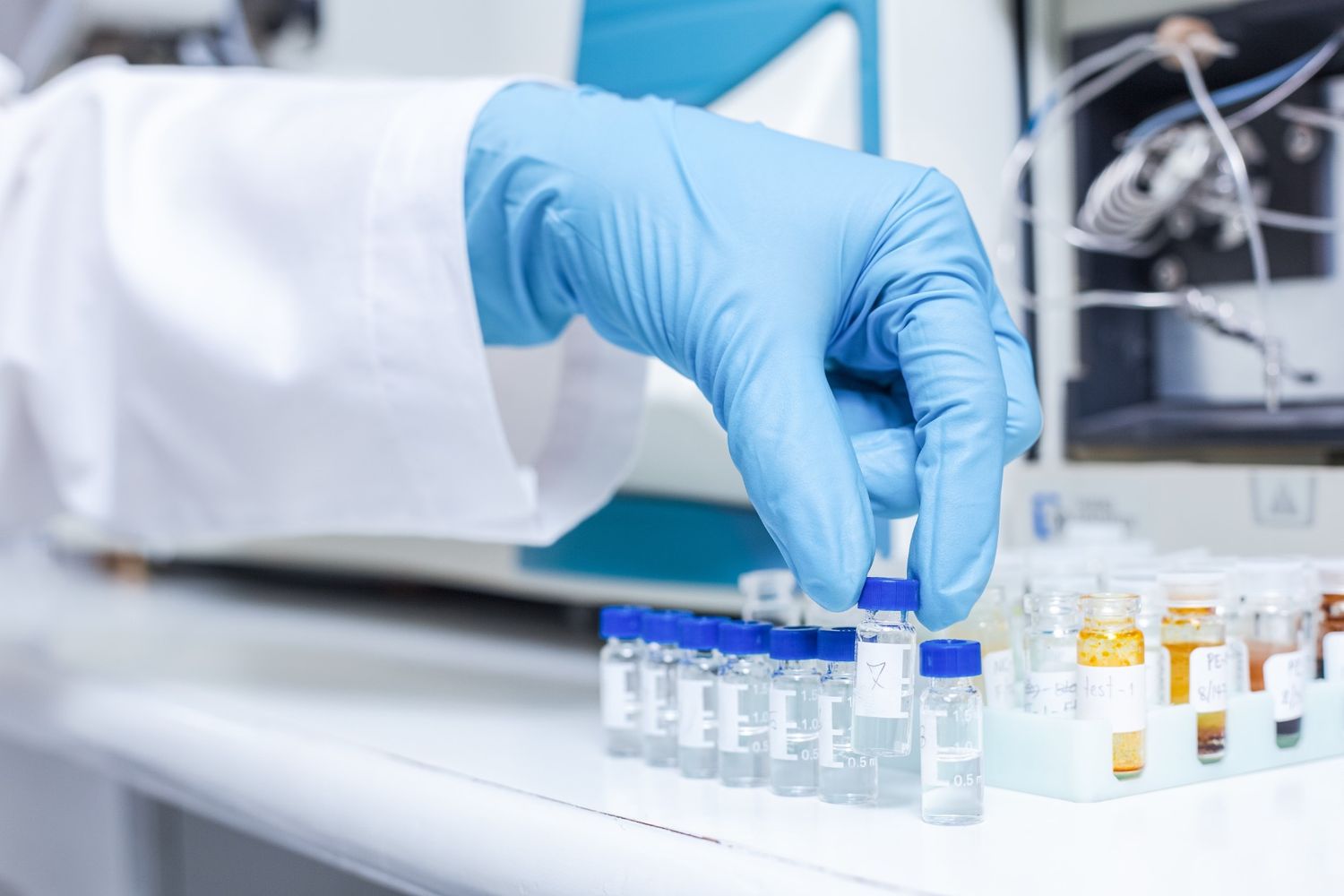
Ordering primers or probes through oligo synthesis is routine for most molecular biology laboratories, but oligo purification is where the real decision-making begins. When selecting purification options, many researchers face a common question: Is standard desalting sufficient, or should a higher purity method such as HPLC be used?
The answer depends on the length of the oligonucleotide, the presence of modifications, and the sensitivity of the application. Each purification method removes different types of impurities generated during synthesis.
Understanding these options helps researchers avoid unnecessary costs while ensuring their oligos perform reliably in PCR, sequencing, or advanced genomic applications.
Why Purification Matters in Oligo Synthesis
Oligonucleotide synthesis involves many sequential chemical reactions. During the process, a small percentage of chains fail to extend fully during each synthesis cycle. This results in a mixture containing the desired full-length sequence as well as shorter fragments, often called truncated oligos or shortmers.
Additional small molecules such as salts, protecting groups, and synthesis reagents are also present after cleavage from the solid support. These contaminants can interfere with downstream experiments if not removed.
Purification methods are therefore applied after synthesis to remove unwanted byproducts and improve the overall quality of the oligonucleotide.
The most common options include:
- Desalting
- PAGE purification
- HPLC purification
- HPLC-CE purification
- High Affinity Purification (HAP)
Each method balances purity, cost, and yield, making some better suited for specific applications.
Desalting: The Standard Option for Routine Work
Desalting is the most basic purification step offered in oligo synthesis services. It removes small molecular impurities such as salts, solvents, and protects group residues using techniques such as precipitation or size-exclusion chromatography.
What desalting does not remove effectively are truncated oligonucleotides that formed during synthesis.
When Desalting Is Usually Enough
For many routine laboratory tasks, desalting works well. Typical examples include:
- Standard PCR primers
- Sequencing primers
- Basic hybridisation probes
- Screening experiments
Short oligos, particularly those under 35 bases, often contain a high proportion of full-length sequences, which makes desalting sufficient for many PCR applications.
Advantages
- Lowest cost option
- Fast processing
- High overall yield
Limitations
- Does not remove most truncated sequences
- Lower overall purity compared with other methods
For laboratories running large numbers of PCR reactions or preliminary screening assays, desalting often offers the best balance between performance and budget.
HPLC Purification: Higher Purity for Demanding Experiments
High-Performance Liquid Chromatography (HPLC) is one of the most widely used advanced purification techniques in oligo synthesis.
This method separates molecules using a chromatography column that distinguishes oligonucleotides based on properties such as length, charge, or hydrophobicity.
HPLC can remove most truncated sequences, resulting in oligonucleotides with purity levels often exceeding 95 percent.
When HPLC Is Recommended
HPLC purification is typically used for:
- NGS library preparation
- Probe-based assays
- qPCR probes with fluorophores
- CRISPR guide RNAs
- Longer oligonucleotides
- Oligos with complex chemical modifications
Certain modifications, especially fluorescent labels, often require HPLC purification to achieve the necessary purity for accurate detection.
Advantages
- High purity
- Removal of truncated sequences
- Suitable for modified oligos
Limitations
- Higher cost
- Reduced yield due to purification losses
- Longer processing time
For precision applications such as sequencing or diagnostic assays, the increased purity can significantly improve experimental reliability.
PAGE and HPLC-CE: Maximum Purity for Specialised Applications
For highly demanding research, additional purification methods may be used.
PAGE Purification
Polyacrylamide Gel Electrophoresis (PAGE) separates oligonucleotides based on size with very high resolution.
It is often used for:
- Very long oligonucleotides
- Gene synthesis
- Mutagenesis studies
- Structural biology applications
However, PAGE purification can be more labour intensive and may reduce the final yield.
HPLC-CE
Some providers offer HPLC combined with capillary electrophoresis (HPLC-CE), which further improves separation accuracy and analytical verification of oligonucleotide purity.
These methods are usually reserved for specialised applications where maximum purity is essential.
A Practical Alternative: High Affinity Purification (HAP)
While advanced purification methods improve oligo quality, they can also increase costs. To address this, Bio Basic offers High Affinity Purification (HAP), a proprietary purification method designed for custom oligonucleotides.
HAP provides a balance between cost and purity, making it suitable for many research applications that require more refinement than desalting but may not need full HPLC purification.
For laboratories managing multiple projects or large screening studies, this type of intermediate purification approach can help control costs without compromising performance.
Matching Purification Methods to Applications
Choosing the right purification strategy often comes down to experimental sensitivity and oligo design.
| Application | Recommended Purification |
|---|---|
| Routine PCR primers | Desalting |
| Standard sequencing primers | Desalting |
| Long oligos (>35 bases) | HPLC or HAP |
| Fluorescent probes | HPLC |
| qPCR probes | HPLC |
| Gene synthesis | PAGE |
| NGS library adapters | HPLC or HPLC-CE |
In many cases, researchers can start with desalting and upgrade purification methods only when higher purity becomes necessary.
Supporting Reliable Oligo Synthesis for Research
Modern molecular biology depends on reliable oligonucleotides. Selecting the right purification method ensures that primers, probes, and guides perform consistently in experiments.
Bio Basic Asia Pacific supports research laboratories with custom oligo synthesis services, offering multiple purification options including Desalt, PAGE, HPLC, HPLC-CE, and High Affinity Purification (HAP).
With flexible purification choices and a wide range of available oligo modifications, researchers can select the most appropriate balance of purity, cost, and yield for their specific applications.
Conclusion
Not every experiment requires the highest level of purification. For many routine assays, desalting provides a practical and cost-effective option. However, when experiments demand higher precision, methods such as HPLC or PAGE offer the purity needed for sensitive applications.
Understanding the differences between purification methods allows researchers to choose wisely. By matching purification strategies to the requirements of the experiment, laboratories can control costs while maintaining reliable results.
Categories
